Apo Island
Apo Island Marine Reserve is one of most successful marine sanctuaries established in the Philippines. Reef hooks and gloves are not allowed and night diving is unfortunately not permitted. The order of dives will be based on the currents and conditions of the day choosing from:
Coconut Point
An often fast paced drift brings divers over the sloping coral reef wall. Along the way giant trevally, blackfin barracuda, big school of big-eyed trevally and plenty of sea snakes can be encountered.
Rocky Point West
Just beyond the chapel opposite the marine park warden’s office, Rocky Point West offers some of the most stunning hard corals to be found in the region with endless patches of leather corals on the top. The steep reef walls support numerous colourful reef species – pyramid butterflyfish and red-toothed triggerfish are here in their hundreds, frogfish, cuttlefish, banded sea snakes and hawksbill turtles are amongst the common sightings.
Cogon
The colourful bottom divided by sand channels is the place to find a big school of big-eyed trevally, huge brown marbled groupers and sea snakes.
Dauin, Negros
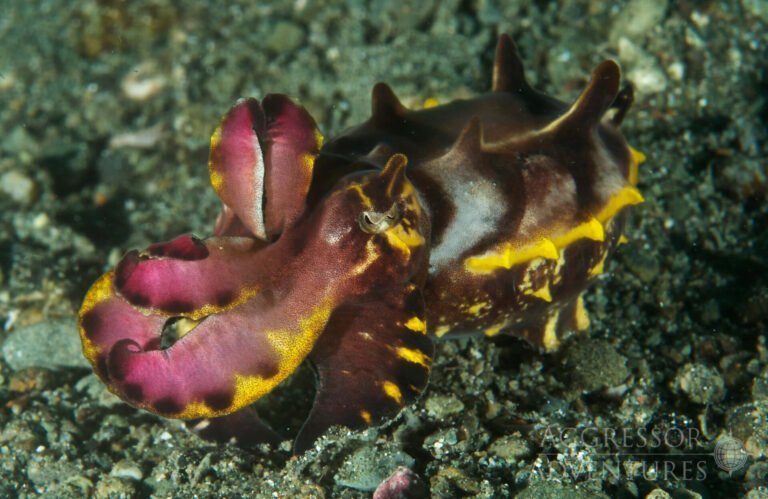
Dauin, with its black volcanic sand, is famous for muck diving. Depending on the season different types and sizes of octopuses, sea horses, (baby) frogfish, different kinds of ghost pipefish and flamboyant cuttlefish can be found.
The Cars
Between 25-30m (80-100ft), car parts as an artificial reef are attracting porcelain crabs and different kinds of shrimps amongst the many weird and wonderful creatures found at this site.
Secret Corner
This dive site contains sand and pebbles only and is the perfect habitat for the smallest, weird and unexpected creatures as cockatoo waspfish, short-fin lionfish and snake and garden eels.
Ceres
This dive site was named after the local bus company that donated its tyres to create an artificial reef, which attracts schools of reef fish. Different kinds of shrimps like to live on this reef together with juvenile reef fish.
Mainit
A mix of coral boulders with soft corals and black volcanic sand. Probably due to the current, all fish are very active which makes this dive very lively and exciting ending in an area with hot sand at the bottom, hence the name Mainit meaning ‘hot’.
San Miguel
Another critter wonderland! When it is the right season, this is the place to find all your favorites.
Oslob
The optional whale shark encounter, where the whale sharks are hand fed, can be done by diving or snorkeling, subject to additional fees payable at destination. Please be advised it is not allowed to use strobes and/or flash lights here.
Balicasag Island
The small island of Balicasag, just off the tip of Panglao, is characterised by its many turtles, coral gardens and steep walls which provide overhangs, cracks & crevices in which to search for a variety of marine species. This area has become a marine protected area since July 2017 and allows two dives per day only with valid permits.
Divers Heaven
The main attraction of this beautiful dive site is the green sea and hawksbill turtles in the shallow waters. The reeftop edge is a nice habitat for schools of colorful damsels and anthias and when lucky also for giant frogfish.
Black Forest
Once famed for its black coral is where we encounter schools of jacks, long-jawed mackerels, red tooth triggerfish and different kinds of fusiliers.
Cabilao Island
There are several interesting wall and coral garden dives around the island of Cabilao and we choose from the following:
Gorgonian Wall
Provides a gentle drift along a fantastic coral reef with schooling fish and plenty of macro life in the shallow water, including the possibility of spotting a Denise’s pygmy seahorse.
Lighthouse
Sloping walls full of sponges and gorgonian fans. This is a great place to dive with large green turtles. Also being seen are giant frogfish which can be spotted resting on sponges and numerous cowries hiding amidst the stunning hard coral garden.
Talisay Tree
Beautiful wall with gorgonians where bubble coral shrimps and orangutan crabs can be found in the bubble corals. The shallow grassy garden with its elephant ear sponges and barrel sponges is a perfect spot for wide angle photography.
Cambaquiz
A fantastic spot where we often make night dives. A gently sloping reef and sandy bottom to 20m – soft corals and sea pens can be found dotted over the sand; also a great site for sightings of bottom dwellers. The grassy top is a favourite crab hideout.
Moalboal, Cebu
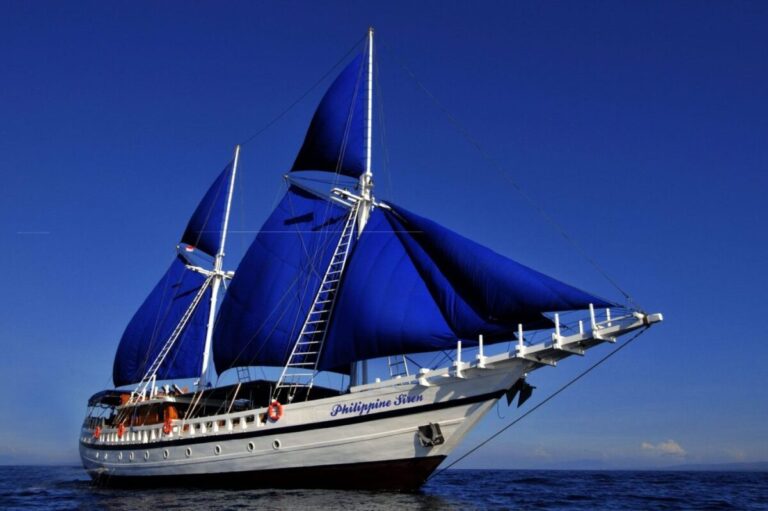
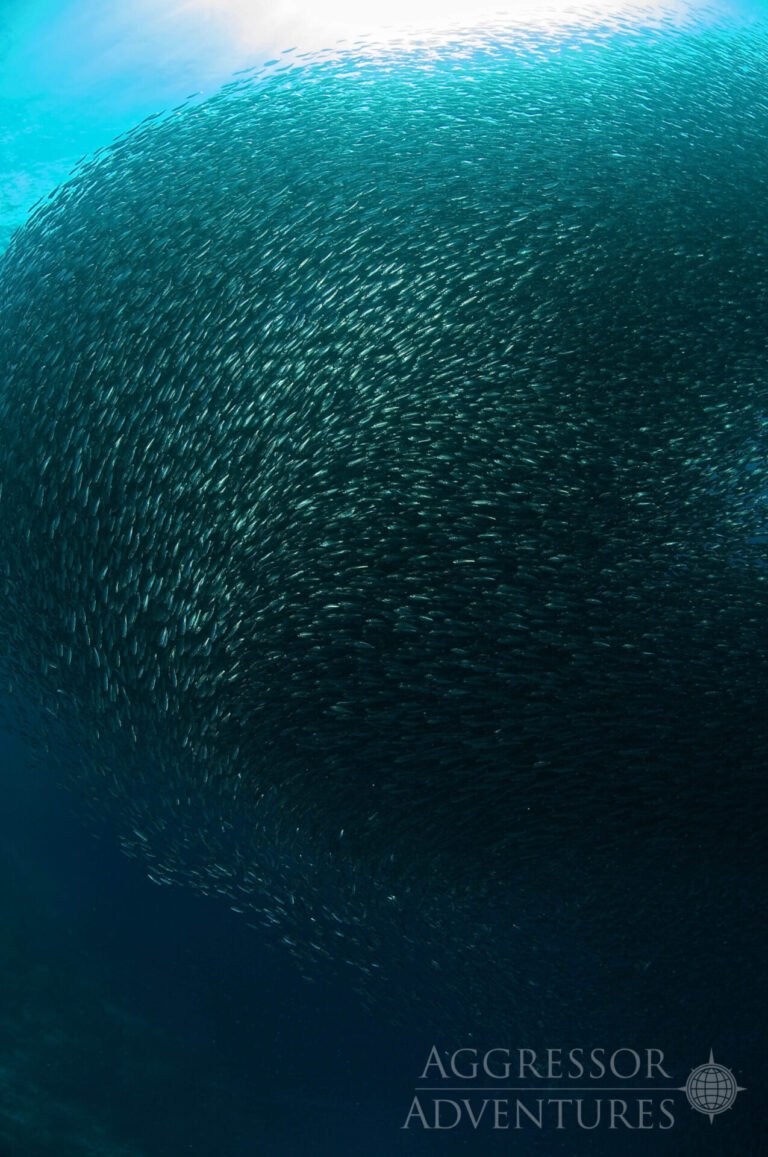
If tides and weather allow then Philippine Siren will cruise to the west side of Cebu. The main attraction of Moalboal is the millions of sardines hanging out in the shallow waters. Other than that the beautiful diving around Pescador Island is just 30 minutes away.
Panagsama Beach
Along with the millions of sardines, performing an underwater ballet, giant frogfish might be found together with reeftop pipefish and ringed pipefish.
Turtle Bay
This site is often dived during the night dives where we can spot sleeping turtles along with different kinds of crabs and shrimps.
Dolphin House
Crocodile needle fish, drummers, milkfish and yellowtail barracudas are living just under the surface while zillions of damsels and anthias are darting around the coral reef top.
Pescador Island
Just 30 minutes away from Moalboal this island is a perfect place to explore the dramatic steep walls and the colorful and lively reeftop.
Zillions of damsels, anthias and chromis are darting around while schools of fusiliers, red tooth triggerfish, surgeonfish, long jawed mackerel, juvenile convict fish and big eyed trevallies are filling the blue. Pescador Island is also home for a couple of giant frogfish. The big cave on the northwest side of the island is a nice gimmick to the dives.